Buy Now

Buy Now

Buy Now

Need parts?

Buy Now

Marktech Optoelectronics Breaks New Ground with Expanded Large-Area Silicon Photodiode Portfolio

Industry-Leading Active Areas Enable Breakthrough Performance in Precision Optical Sensing

LATHAM, NY – January 6, 2026 – Marktech Optoelectronics, a pioneer in advanced photodetector and optoelectronic solutions, today unveiled a dramatic expansion of its silicon photodiode platform, setting new standards for sensitivity and optical capture in demanding applications from spacecraft navigation to atomic-scale microscopy.

The new lineup features single-element detectors and an expanded family of silicon quadrant photodiodes (Si QPDs) with larger active areas than in previous offerings. This quantum leap translates directly into superior low-light detection, enhanced position precision, and expanded capabilities for optical alignment, analytical instrumentation, and position-sensing systems.

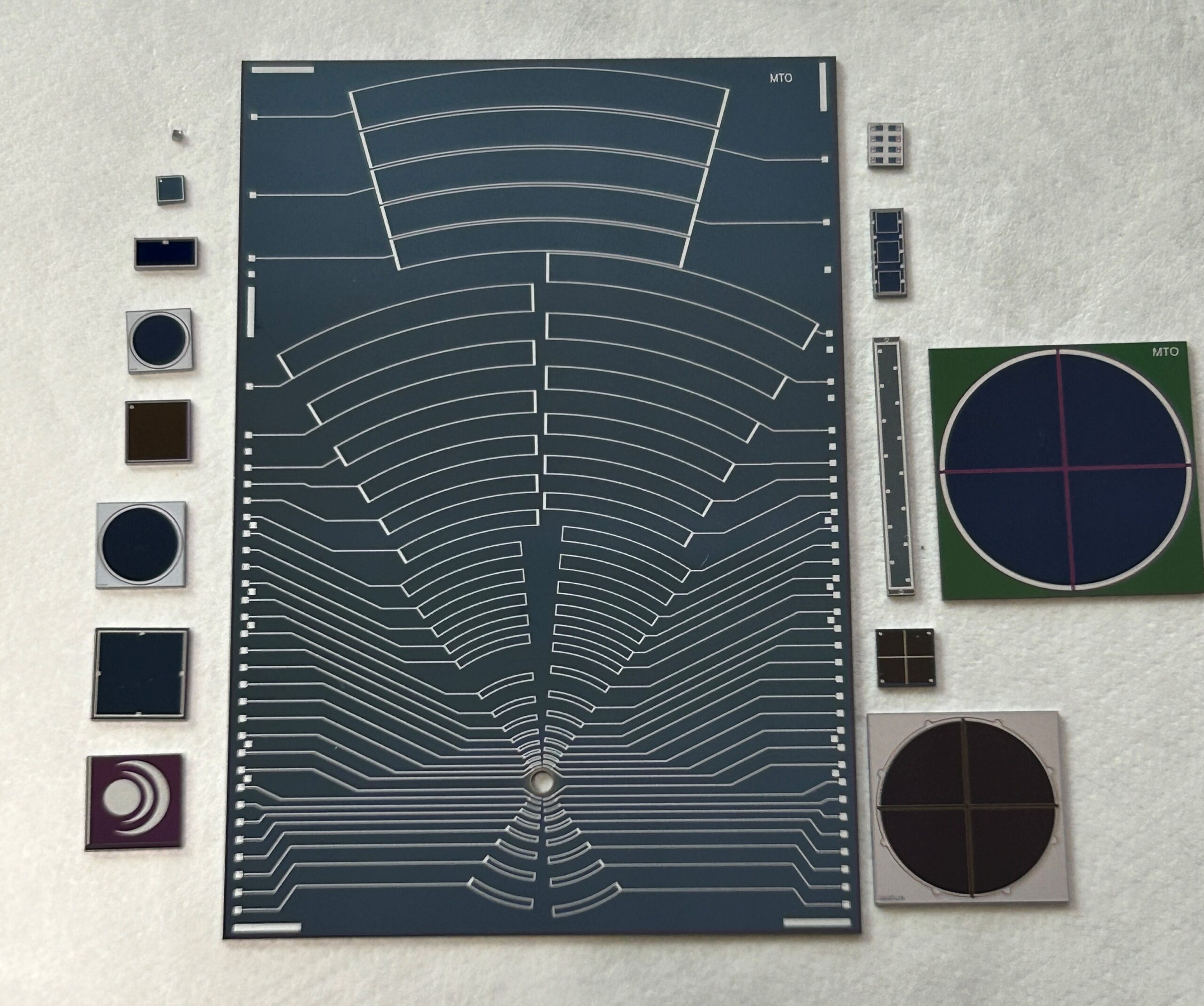
Marktech has also manufactured extremely large active area silicon photodiode arrays, as shown below in a complex 64-element array. Large or small, many of our standard silicon photodiode arrays use our proprietary cross-talk-reduction technology to enhance the signal integrity of individual elements.

Images of Marktech West standard and custom silicon photodiodes - single element and quadrant photodiodes

The Marktech West 64 element silicon photodiode array (above center) has 
active areas from 0.01mm² to 35mm², a 3500X difference on the same monolithic chip.

Our silicon photodiodes are manufactured in the USA (California), allowing us to tightly control the manufacturing process from design through silicon device fabrication, packaging, and final testing. This approach enables us to produce high-reliability silicon detectors with outstanding performance repeatedly.  The Marktech West factory is in Simi Valley, California, and our engineering and marketing headquarters are in Latham, New York.

More Light, More Signal, More Precision

“Larger active areas fundamentally change what’s possible in optical detection,” explains Barry Jones, Marktech West Business Manager and Si PD Expert. “By capturing more incident photons, these detectors deliver substantially higher signal levels and can detect lower light inputs that smaller devices cannot capture, which is a critical advantage in applications like spectrophotometry, biomedical diagnostics, and environmental monitoring. Larger area silicon quads provide improved alignment tolerance and better detection of large, weak, and divergent beams.”

The new silicon photodiodes achieve excellent responsivity across the 250–1100 nm spectrum, with peak performance optimized in the NIR, UVA-blue-green, and visible spectral ranges, making them ideal for near-infrared (NIR) beam alignment, fluorimetry, colorimetry, and high-accuracy optical feedback systems.

Quadrant Photodiodes: From Satellites to Atomic Resolution

Marktech’s expanded silicon quadrant photodiode lineup, now featuring includes active areas of 5.8 mm², 25 mm², 50 mm², and a 100 mm² device currently in development.

This represents a 4.3× to 17.2× increase in optical capture area—enabling improved precision in beam positioning, optical nulling, tracking, and alignment systems.

Applications span from the astronomical to the atomic scale:

  • Fine Sun Sensors (FSSs) for spacecraft use quadrant photodiodes to determine a satellite’s precise orientation relative to the sun—critical for attitude control and navigation in orbit
  • Atomic Force Microscopes (AFMs) rely on quadrant detectors to measure nanometer-scale cantilever deflections, enabling scientists to map surface topography at atomic resolution

Comparison of New Large Active Area Quadrant Silicon Photodiodes

Active Area

Scale Comparison


Marktech West Si QPD Part Numbers

5.8 mm²

Baseline

MT03-004 (5 pin TO5), MT03-81 (SMD, 6 pads)

25 mm2

~4.3x larger

MT03-097 (6 pin TO8, 0.5nA@5V dark current),
MT03-098 (6 pin TO8. 1.0nA@5V dark current)

50 mm²

~8.6× larger

MT03-092 (6 pin TO8, 0.5nA@5V dark current),
MT03-091 (6 pin TO8, 1.0nA@5V dark current)

100 mm²

~17.2× larger

(Under development)


Marktech Silicon Quadrant Package Types and Datasheets:


Part Number


Peak Responsivity


Package Type


Datasheet

MT03-004

940 nm

TO-5 Metal Can, Flat Lens (5-pin)

Download PDF

MT03-081

940 nm

ATLAS SMD, (6 pads)

Download PDF

MT03-094

950 nm

TO-8 Metal Can, Flat Lens (6-pin)

Download PDF

MT03-095

950 nm

TO-8 Metal Can, Flat Lens (6-pin)

Download PDF

MT03-092

950 nm

TO-8 Metal Can, Flat Lens (6-pin)

Download PDF

MT03-091

950 nm

TO-8 Metal Can, Flat Lens (6-pin)

Download PDF


Explore the full quadrant lineup: marktechopto.com/quadrant-and-array-photodiode-detectors

New Single-Element Detectors: Built for Demanding Environments

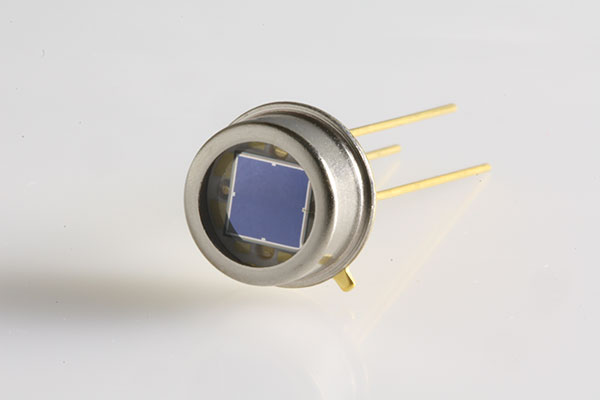
Marktech’s latest single-element silicon photodiodes combine high sensitivity with exceptional stability and low noise. The hermetic TO-can packaging maintains reliability even under challenging environmental conditions. Marktech can also custom package its new detectors in high-performance ceramic SAW, proprietary hermetic ATLAS SMD (see MT03-081), and hybrid formats (photodiodes co-packaged with TIAs and TECs). Optical filters can also be integrated into custom silicon photodiode designs, such as UVA or visible light filters for flame detection or fluorescence applications. These SiPD detectors are engineered for performance and reliability in industrial, medical, and analytical instrument applications. These large active-area detectors use a proprietary process to deliver high sensitivity across the 300-560nm range (365 nm UVA and Blue & Green enhanced), ideal for fire sensing, fluorimetry, spectrometry, document or currency authentication, and gas detection (NO2, ozone). One consideration for larger active-area photodiodes is reduced bandwidth or speed. Smaller active-area detectors have faster response.

New Large Active Area Single Element Silicon Photodiode Models:

Part
Number

Active Area

Peak Quantum Efficiency

Package Type

Datasheet

MT03-083

15 mm2

375 nm

TO-5 Metal Can, Flat Lens (2-pin)

Download PDF

MT03-084

15 mm2

375 nm

TO-5 Metal Can, Flat Lens (3-pin)

Download PDF

Key features include exceptional uniformity, high linearity, and fast response—essential characteristics for precision detection in medical diagnostics, industrial instrumentation, and high-resolution optical feedback loops.

Learn more: marktechopto.com/detectors/silicon-photodetectors

Detection Beyond Silicon: Extended IR, Deep UVC, and Custom Solutions

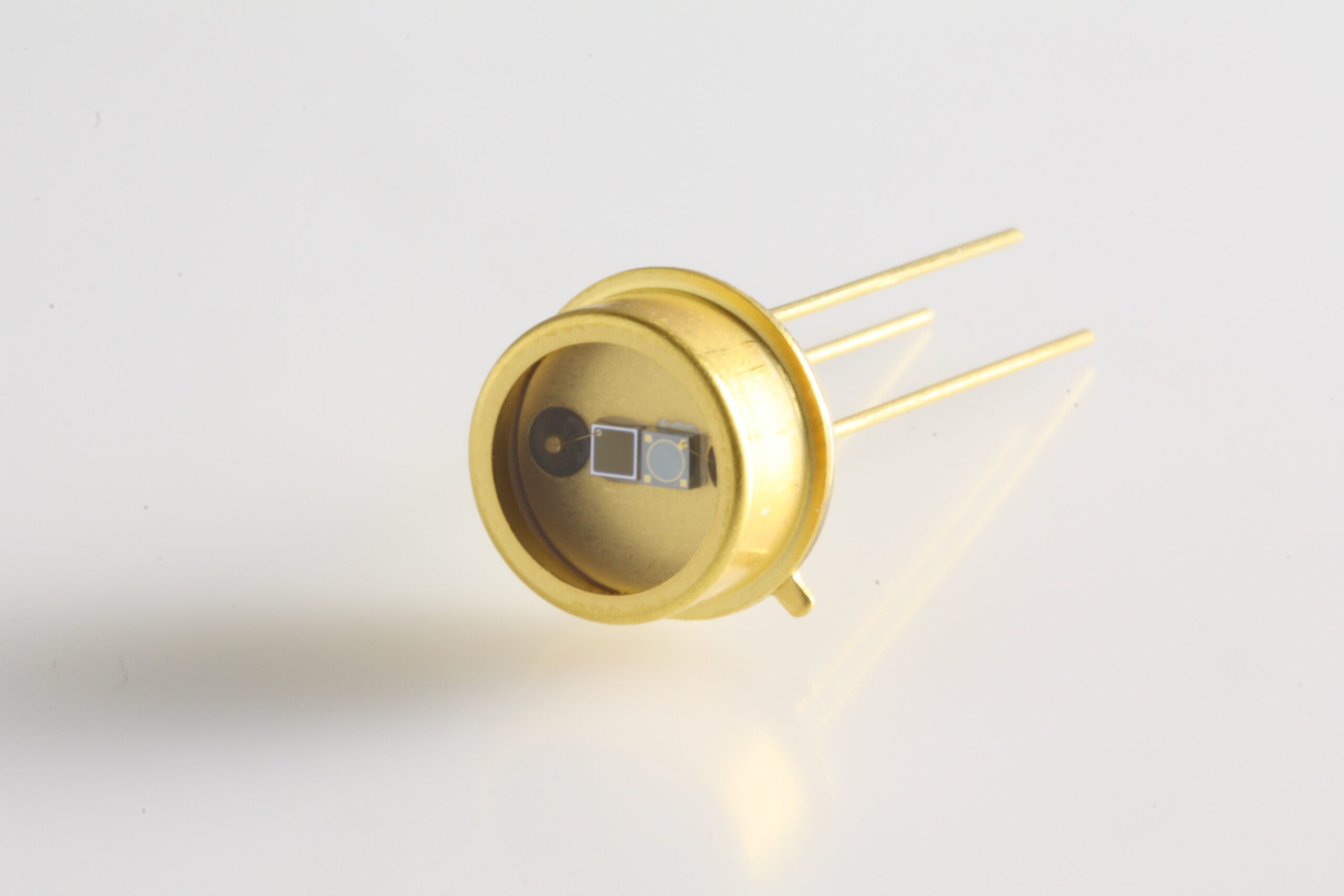
Image of MT03-041 - • Dual-chip silicon-InGaAs detectors providing ultra-broadband spectral coverage from 250 to 2600 nm—ideal for comprehensive spectroscopic analysis.

For applications demanding detection beyond silicon’s 1100 nm limit, Marktech offers:

  • InGaAs photodiodes with 1.7 μm and 2.6 μm cutoff wavelengths
  • Dual-chip silicon-InGaAs detectors providing ultra-broadband spectral coverage from 250 to 2600 nm—ideal for comprehensive spectroscopic analysis
  • Silicon carbide photodiodes for deep UVC detection below the 250 nm limit of silicon photodiodes

The Indium Gallium Arsenide (InGaAs) photodiodes in our Si+InGaAs dual chip detectors are produced by Optrans Corporation, located in Kawasaki-Shi, Japan. With fully integrated in-house capabilities—from epitaxial wafer growth and die fabrication to optical design, assembly, and advanced packaging—Optrans Corporation reliably delivers superior precision and dependable performance with manufacturing flexibility.

Dual Silicon + InGaAs Photodiode Chip Detectors:

Part
Number

Active
Area

Peak
Responsivity

Spectral
Range

Package
 Type

Datasheet


MT03-041


1 mm2

950 nm,
1750 nm


250 to 1750 nm

TO-39 Metal Can, Flat Lens (3-pin)

Download PDF


MT03-047


1 mm2

950 nm,
1750 nm


250 to 1750 nm

Ceramic SAW package (5-pad)

Download PDF

Custom detector solutions include:

  • Multi-element monolithic or assembled photodiode arrays using SiC, silicon, and InGaAs
  • Customized peak responsivity (e.g., 1064 nm) – For volume orders, NRE & tooling charges apply
  • Custom optical filters to exclude excitation wavelengths in fluorescence applications or narrow detection to 300 to 320 for flame detection (visible, IR, and arc/spark rejection)
  • Precision-aligned assembled two-chip detectors for wide spectral range detection needs
  • Precision-aligned assembled multiple-chip detectors with integral optical filters
  • Hybridized detectors – Integral thermoelectric coolers (TECs) and transimpedance amplifiers (TIAs) co-packaged with the silicon photodiode

These customizable options allow OEMs to specify responsivity, peak spectral sensitivity, active area, segmentation, lens configuration, optical filters, hybridization (TIAs, TECs), and packaging to match exact system requirements—perfect for triangulation sensing, dispersive spectroscopy, and multi-axis displacement systems.

Applications Across Industries


Marktech’s expanded detector platform empowers innovation in:

  • Laser beam alignment & nulling
  • Fiber optic and free-space optical communications
  • Optical metrology and precision NIR sensing
  • Chemical and gas analysis
  • Medical imaging & diagnostics
  • Environmental and process monitoring
  • Robotics, positioning, and motion control
  • Spectrophotometers and analytical instruments
  • Optical feedback loops & LED/laser power monitoring
  • Drone guidance systems
  • Biomedical instrumentation

Please explore our complete detector portfolio: marktechopto.com/marktech-detectors


Visit Our Booth at Photonics West 2026 to Learn More About Our Photonics Silicon Photodiode Manufacturing Capabilities

Plan now to visit our booth (#259) at SPIE Photonics West, 17 – 22 January 2026 in San Francisco, California to help us celebrate 40 years of photonics innovation.
SPIE Photonics West is the optics and photonics industry’s flagship exhibition to meet the sector’s biggest names and learn about the latest innovations.

Learn more: https://spie.org/PW

See our PW26 company listing: (https://spie.org/ExhibitorDetail?ExpoID=5022&ExhibitorID=104424)


About Marktech Optoelectronics

Founded in 1985, Marktech Optoelectronics, Inc. (www.marktechopto.com) (Marktech) is a privately held joint venture of Optrans Corporation and Marktech International. Marktech is a top designer, low-volume packager, and fabless manufacturer of silicon photodiodes, as well as a value-added distributor of custom optoelectronics, including UV, visible, near-infrared (NIR), and short-wavelength infrared (SWIR) emitters, MWIR LEDs, detectors, InP epi wafers, and other compound semiconductors. Headquartered in Latham, NY, Marktech operates extensive optical and electrical testing laboratories for full characterization of detectors and emitters and pioneered tight sorting for LED peak wavelength and output power—still essential for many medical diagnostic applications.
https://marktechopto.com/

About Optrans Corporation

Optrans Corp. (optrans.com/) (Optrans), is a private, leading manufacturer of optoelectronic components, delivering high-performance solutions across the UV, visible, and infrared spectra. With fully integrated in-house manufacturing – from epiwafer growth to die fabrication to optical design, assembly, and advanced packaging – Optrans ensures precision, quality, and flexibility. The Optrans product lineup includes UV, visible, and IR LEDs (NIR, SWIR, MWIR), point-source LEDs, photodiodes, photo-reflectors, and phototransistors, all engineered for demanding applications that require spectral accuracy, thermal management, and long-term reliability. Headquartered in Kawasaki City, Optrans collaborates closely with manufacturing companies in Japan, Asia, Europe, and the United States and excels at providing consistent support from component development through module implementation and system integration.
https://optrans.com/

Media Contact:
Gary J. Kardys
Chief Marketing Officer (CMO)
  [email protected]

Related Articles

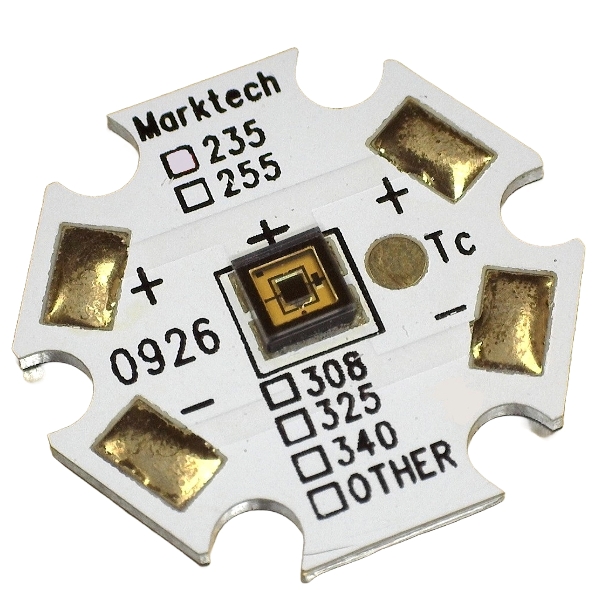
Image opf Deep UVC 235nm LED mounted on a metal-cored starboard for rapid prototype and design evaluation.
Image of viruses and blue illumination
Images of New SiPDs with minimal-to-no visible-light sensitivity (MTD3910GC-F3 & MTD3910G-F3) and a blue-green-optimized device with 525 nm peak responsivity (MTD5052D3)